Safe Systems in a Chaotic World
System failures of all flavors, zero-days, mass layoffs, the climate crisis, AI slop, war, crumbling infrastructure and institutions. Incompetence is so ambient that the term "competency porn" was coined to describe the escapist pleasure of watching someone simply do a thing well. You cannot control the world, but you can decide what you and your systems will refuse to do. Invariants and the constraints that make them hold are the only way to survive chaos. There is a method for finding them, a discipline for proving they hold, and a runtime built by people who sensed the chaos early. I'm the CTO of a multinational healthcare software company. I'm in the code with my teams daily. When we think of the term "loss" we're thinking about lives. So we borrow from people who worked the "safety critical" problem before us: systems safety engineering (STAMP and STPA), mistake-proofing from the Toyota Production System, lightweight formal specification, and a virtual machine designed by people who assumed the environments surrounding our code would fail. You'll leave able to: - apply safety engineering to shrink the blast radius of LLMs and other threat actors, including ones acting in bad faith - run continuously available systems on commodity, three-nines cloud junk - move faster by not breaking things - find the invariants worth defending, and enforce them where they can't be forgotten under deadline pressure I've survived thirty-two years in the trenches through several boom-bubble-pop cycles. We're in the most hostile environment I've experienced. These lessons are all I have to offer, and I'm optimistic they will be enough.
Bryan Hunter
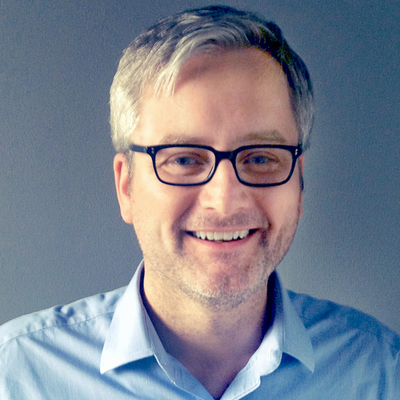
Bryan Hunter is the Global CTO of Hopper Healthcare. He has decades of experience building fault-tolerant, safety critical, distributed systems in healthcare and other regulated environments. In 2012 he founded Nashville Functional Programmers (NashFP). He enjoys supporting FP communities around the world and has shared his experience at conferences and universities in London, Manila, Oslo, Bangalore, and throughout the United States.